Wednesday, September 28, 2011

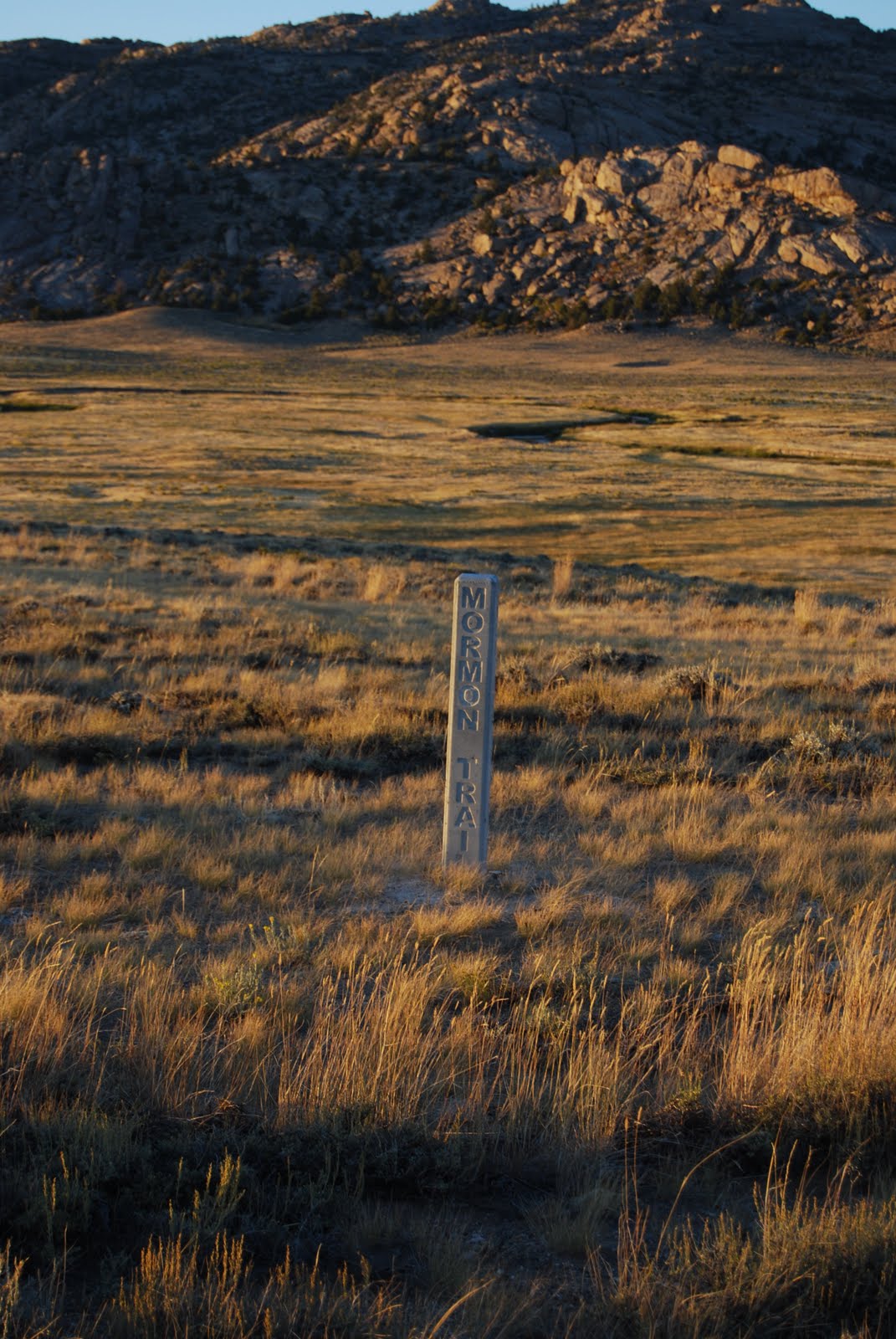
LDS Monument - Martins Cove, Wyoming

I have always wanted to make it to Martins' Cove. It has great religious significance to me. A great place to contemplate the trials and struggles of the early pioneers of the Mormon Church. Today the Mormon Handcart Visitors’ Center, near Martin’s Cove, is a reminder of not only the ill-fated handcart companies but also a tribute to the many pioneers who traveled with handcarts across the plains.


The Martin Handcart Company, however, was forced by a storm to stop in a small valley on the side of a mountain with very little shelter. After wading through deep snow up to this point, the pioneers stopped in a cove, formed by rock outcroppings. Trees provided protection and fuel. There they waited for help and supplies from Salt Lake City. In just five days, 56 of the 145 total who died in the crossing perished. But thanks to heroic rescue efforts of Church members sent by Brigham Young, the majority, 431 of the Martin handcart pioneers, survived the trip.


Visitor Center Home

Thursday, September 15, 2011

Ellsworth AFB - Air Museum, South Dakota

A great desire of my husbands was to go to the Air Museum, Ellsworth AFB, South Dakota. I even found the visit to be really interesting. This Air Force Base is where the Titan Missle was managed. There are many old silos where the Titan Missles were located throughout North and South Dakota. Part of the defense of our country during the cold war with Russia.


Wednesday, September 14, 2011

Rapid City, SD - "Vintage Car" Graveyard


On an exploration trip around Rapid City I came upon this car graveyard. Great place to take vintage photos.


You've got to love this!

Monday, September 12, 2011

Mt. Rushmore, South Dakota

Fun Trip to Mt. Rushmore!


Roger and I ventured out to Mt. Rushmore. We made it just in time for the evening program.

Sunday, September 11, 2011

Rapid City, South Dakota Trip

Roger attended a training meeting for Indian Health Services in Rapid City, South Dakota. I was invited to tag along, and I am so glad

The trip to Rapid City took three and a half hours, not bad at all. As you can see, I love pictures of Old buildings and caught a few on the drive to Rapid City.
We passed a lot of very small towns along the way.


I love downtown Rapid City. The community has maintained a beautiful downtown area, and it has been restored and vibrant. Some of my favorite shops in Rapid City were: Prairie Sage - Indian Traders Shop, Tandy Leather shop, Boutiques, and awesome restaurants.


Graffiti Alley - This Alley has been set aside for the budding tag artist of Rapid City. As you can see it is a very wide alley, that in the early stages of building the downtown Rapid City Area. It is where all the major electrical lines are placed between the buildings. It is an oversized alley way.

I located a beading shop and took a private class for two days learning to make Cabochons - A style of beading using a large stone in the center with seed beads all around. It is similar to Indian Beading

Here are some photos of my finished beading projects.

Monday, September 5, 2011

Medora, North Dakota - Theodore Roosevelts favorite place to visit.


Over the Memorial Weekend Break, Roger and I traveled West towards Medora, North Dakota for an overnight stay. Medora is a small tourist town celebrating Theodore Roosevelt and other explorers and settlers to the western part of North Dakota. The town of Medora was founded in April 1883 by a 24 year old French nobleman, the Marquis de Mores. He named the town for his bride, the former Medora von Hoffman, daughter of a wealthy New York City banker. The town fell into disrepair after a few decades then in 1962 and entrepreneur, Harold Schafer and his Gold Seal Company began a restoration and modernization of the old western town, developing many additonal attractions.


Medora Musical
While there we were entertained at the Medora Musical. This is a professionally produced musical that is dedicated to the legacy of our 26th President, Theodore Roosevelt. It is held at the Burning Hills Amphitheatre. The setting reminds me a lot of the Tuacahn stage in Ivins, Utah. The performance was informational about the history of North Dakota, and also very entertaining.

Theodore Roosevelt National Park


The following day we traveled through the Theodore Roosevelt National Park. The park covers 110 Square miles. There is a 36 Mile scenic loop through the park. They call this area also "The Badlands". It reminds me a lot of Southern Utah. This area is what inspired Pres. Roosevelt to pass the 1906 Antiquities Act to preserve National Monuments throughout the United States. By the end of his presidency he had preserved 230,000,000 acres of public land.


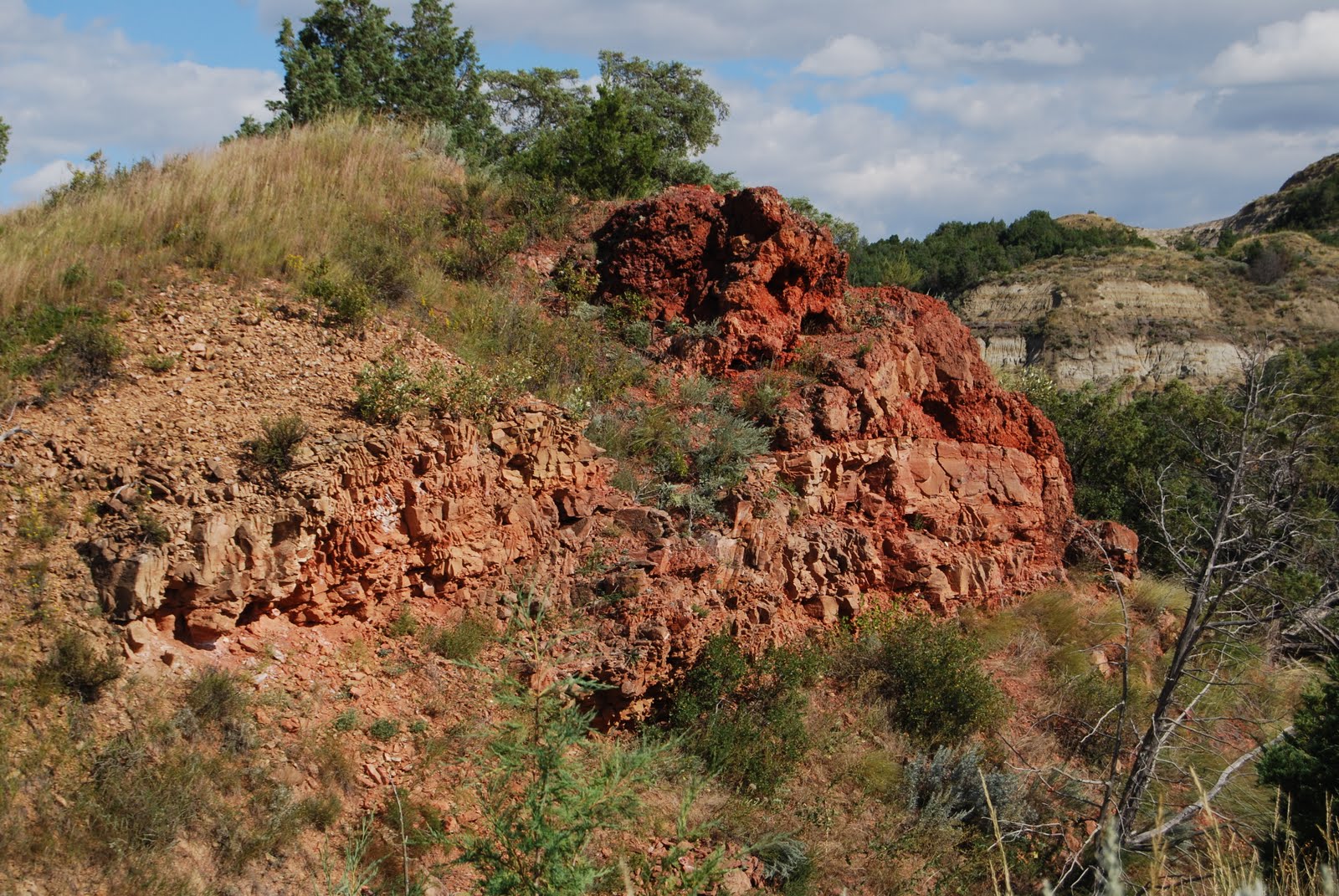
We saw wild horses, Prairie dogs galore, and bison. We went on a hike to check out coal deposits that had caught on fire and burned for years through out the park. Most likely lightening struck a coal vein and once it started burning it did not stop until there was no longer a natural connection for the coal to continue burning. This burning caused the oxides in the surrounding dirt to turn red.

Burned Coal Veins

There are a lot of nice hotels amd motels to stay in while visiting Medora. There is also a few campgrounds for those who love camping. The small town of Medora has historical buildings, museums, shops, and we even witnessed a gun fight. I would recommend a trip to Medora, North Dakota.


On the drive back to Fort Yates, we viewed a huge brick church from the freeway. Due to the explorers that we have become, we exited the freeway in Richardton, ND. Here we found this large Catholic Church. I love architecture and this building was magnificent.

Tuesday, August 30, 2011

Relief Society President at Ft. Yates, North Dakota

There are very few members attending the Branch in Ft. Yates. The Branch President, President Laundreax (He is Indian, but I am not positive he comes from the local tribe) lives 20 minutes from the church in a small community called Cannon Ball.
The Tribe community of Cannon Ball derives its name from large stones, (actually big boulders) that are found there naturally,that are perfectly round. They look like cannon balls. It is an interesting phenomenen to see. They are a good 24 inches to 36 inches in width sometimes.

President Laundreax's name is French in nature. This is a reflection of the
French explorers who settled and explored the area during the time of the "Lewis and Clark" expeditions through the Northwestern part of the United States. Some of the explorers became involved with the native North Dakota Indian women.

Pres. Laudreax and his wife are the only active temple endowed couple in the branch that I am aware of. I understand he has been the Branch President for nearly eight years. The first Sunday I attended the Branch I was shocked that the Pres. called on me to bare my testimony. I was already in culture shock that day. I was not prepared for the small number of members in attendance when I arrived to church. Roger tried to explain this to me before we arrived to church, but seeing is believing.


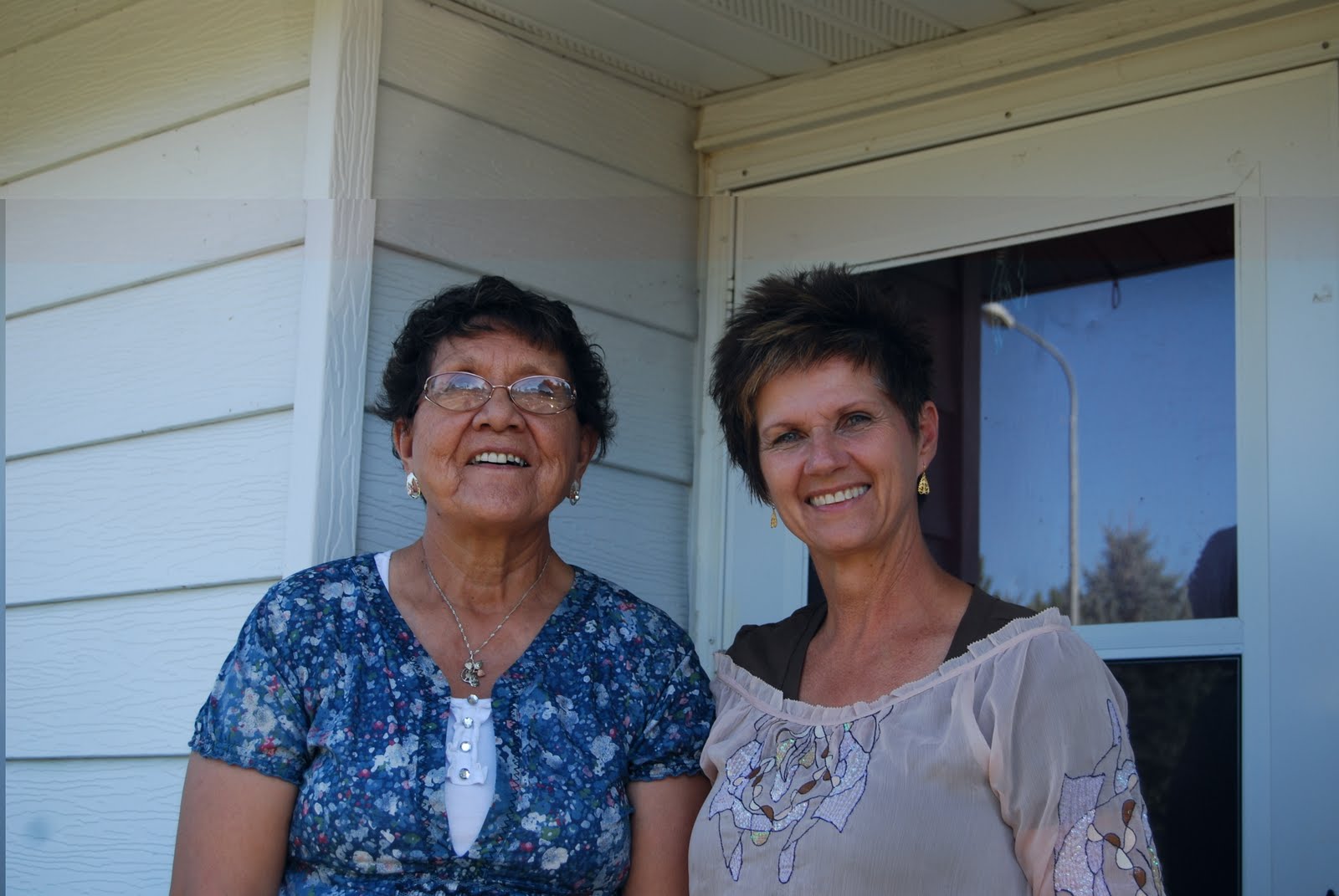
Sis. Rosalyn Sandland is the Relief Society President in the Ft. Yates Branch. She and the Elders say they "Prayed us to Ft.Yates". She works as a fulltime Secretary for the Tribe lawyers in a very nice building here in Ft.Yates. Her husband is a Rancher and they have crops for feed that they have been harvesting recently. She works all day and then goes home to help her husband cut the alfalfa in the evening until it gets dark.

We have been visiting the less active in the branch ever since the first week I arrived here. So far we have been to around 20 sisters homes. I love visiting with her, she has a wonderful spirit about her and is so loving towards the sisters in the Branch.

The visits are paying off, as we have seen an increase in Sacrament Meeting attendance. The first week I attended the Branch, there were 15 in attendance. Four weeks later.... we had 35 in attendance this past Sunday. For some reason they do not have Sunday School class here, which is greatly needed to teach the members the basic doctrines of the church. No one knows why they stopped or when.

Sacrament meeting is first, and half of the women show up in pants. After Sacrament meeting there is Relief Society, Primary, Priesthood, and sometimes YW if any teenage girls show up. They are not quick to extend callings in the Branch. I have been leading the singing in Sacrament Meeting and teaching the Relief Society lesson ever since the first week I attended. This past week I did both of those activities and Roger and I also spoke in Sacrament Meeting. A case of overexposure for sure! (I can't call them "callings" because I have not been called to them, just appointed for now.)

Usually we have three or four sisters stay for Relief Society, and the others leave after Sacrament Meeting. This past Sunday there were seven in attendance in Relief Society. It is such a blessing to have more sisters coming out. You have never heard a prayer until you have heard the native american women pray. I am always amazed with their deep devotion and expression. There is so much activation work to do, and it is a very big challenge to know where to begin. We have no idea what has happened to the members or why they stopped coming.

A few years ago there was a senior missionary couple the "Ellisons" from an area near Lehi, Utah, who served their mission here in Ft. Yates. I wish we could have two sets of Senior Missionaries couples here right now to help train and build up the branch. Senior Missionaries couples make a huge difference in branches like this. The people love the Ellison's so much and talk about them with such high regard. Unfortunately, once they left from their mission, the branch did not sustain itself for long.

Many of the members living in Ft.Yates were once involved in the Indian Placement program when Pres. Kimball was the Prophet. It was a requirement of the participants to be members of the church in order to participate in the program. Many have fond memories of their foster families and the experiences they had living with LDS families. It is debatable whether they were ever truly converted and had Testimonies of the Gospel though. Often, they comment how well they did personally while living with these families. They struggled returning to the tribe and the peer pressure back on the reservation when they completed their stays. Sometimes those who did not participate in these programs were not very welcoming back of the ones who went away to participate in the program.

The alcohol,drug addiction, and diabetes is a problem here on the "Resv". (This is what the local indians call the reservation) That is a subject for another blog day! Also one day I will share Rogers experience at the dental clinic here. Lets just say, there is a lot of tooth pulling going on!